
Turning Text to Art: How AI Sees Your Words
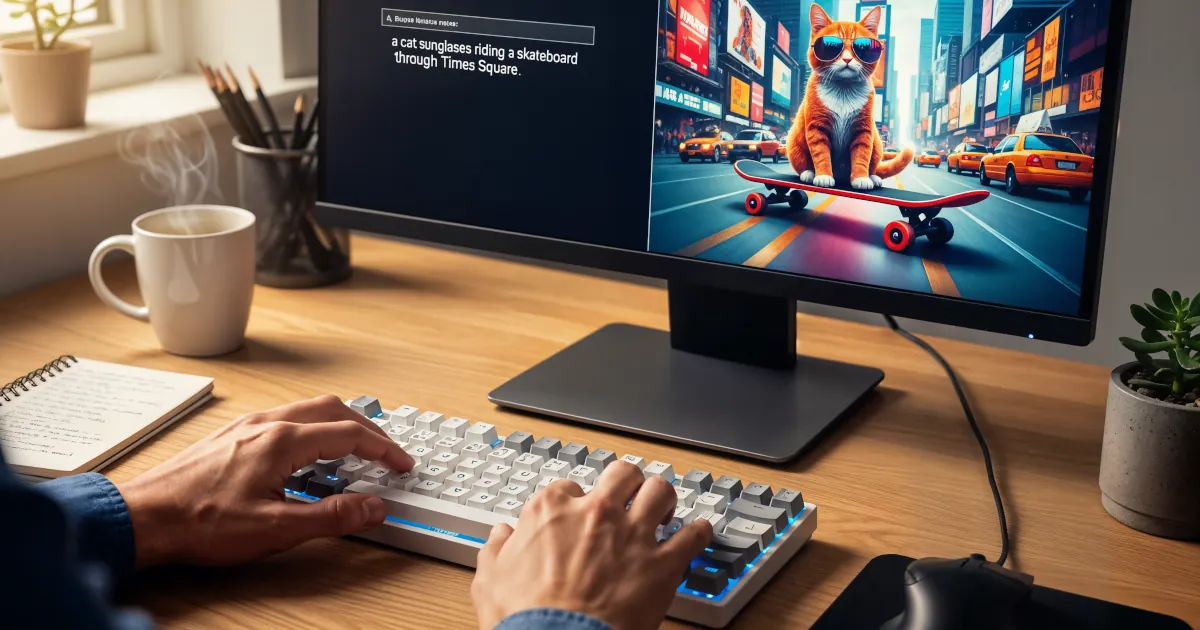
Imagine typing a sentence like “a cat wearing sunglasses riding a skateboard through Times Square” and instantly seeing that very image brought to life—crazy, right? Well, thanks to a new kind of AI magic, that’s not only possible, it’s actually pretty easy. Welcome to the fantastic world of AI image generation. This is where your words fuel creativity and where artificial intelligence paints pictures straight from your imagination.
Today, we’re diving into how this works, what’s going on behind the scenes, and how artists, creators, and even meme enthusiasts are using it to bring their visions to life.
Let’s decode the fun!
So, What is an AI Image Generation Tool Anyway?
In simple terms, an AI image generation tool turns text into pictures. You write something (a "prompt") and the AI creates an image based on that input. Think of it as whispering your idea into the digital ear of a robot artist, and watching as it sketches your vision—sometimes with jaw-dropping results.
Platforms like DALL·E, Midjourney, Stable Diffusion, and Adobe Firefly are some of the popular tools out there. These are powered by highly advanced machine learning models trained on millions (or billions!) of images and text descriptions. They learn how visual styles, objects, and concepts relate to words and phrases... and then, they remix it all to create something new when prompted.
Basically, AI looks at your words and says, “I got this,” then paints you a picture.
The Secret Sauce: What’s Behind the Curtain?
Let’s make this simple without going full rocket science.
AI image generation tools are mostly built on diffusion models or GANs (Generative Adversarial Networks). But one of the most magical inventions in recent AI magic-making is called Stable Diffusion.
Here’s a fun breakdown:
It reads your prompt.
You say “a sci-fi city floating among the clouds at sunset.” The AI understands each component: sci-fi, city, floating, clouds, sunset.It imagines what that might look like.
Based on mountains of training data (images paired with descriptions scraped from the internet), it combines styles, genres, objects, and lighting to draft a version in its virtual head.It generates the image.
Using algorithms and tons of tiny math steps, the AI turns its abstract idea into a final image. It goes from a blurry mess (like static) to crystal-clear detail over several steps. That’s the “diffusion” part.
The key? These models don’t copy existing images—they generate brand new ones based on learned visual concepts.
Let’s Talk Prompts: The Words That Drive the Art
If AI is your digital artist, the prompt is your instruction. The more clearly you express your vision, the better your results will be.
Prompts can be short:
- “A unicorn in a forest.”
Or detailed:
- “A neon-lit Tokyo street during a rainy night, with reflections on wet pavement, in the style of Blade Runner.”
Think of prompts as a form of collaboration. The AI doesn’t know what you want until you tell it. The clearer and more imaginative your prompt, the closer the AI matches your vision.
Advanced users even use prompt engineering—adding certain keywords or phrases that affect style (like “4K,” “hyper-realistic,” “digital painting,” or “mechanical blueprint”).
It’s part art, part logic puzzle, and part digital magic show.
Can AI Understand Style?
Absolutely—and this is where things get wild.
Tell an AI to create “a painting of a sunflower in the style of Van Gogh,” and it’ll whip out something with swirling brushstrokes that look like they belong in a museum.
Want a sci-fi movie poster? A Pixar-style character? A medieval manuscript illustration?
A good AI image generation tool can shift between artistic styles just by you tweaking your prompt.
This means creators aren’t stuck with one look—they can use AI to explore every visual possibility from whimsical sketches to photorealistic landscapes.
A Playground for Creators
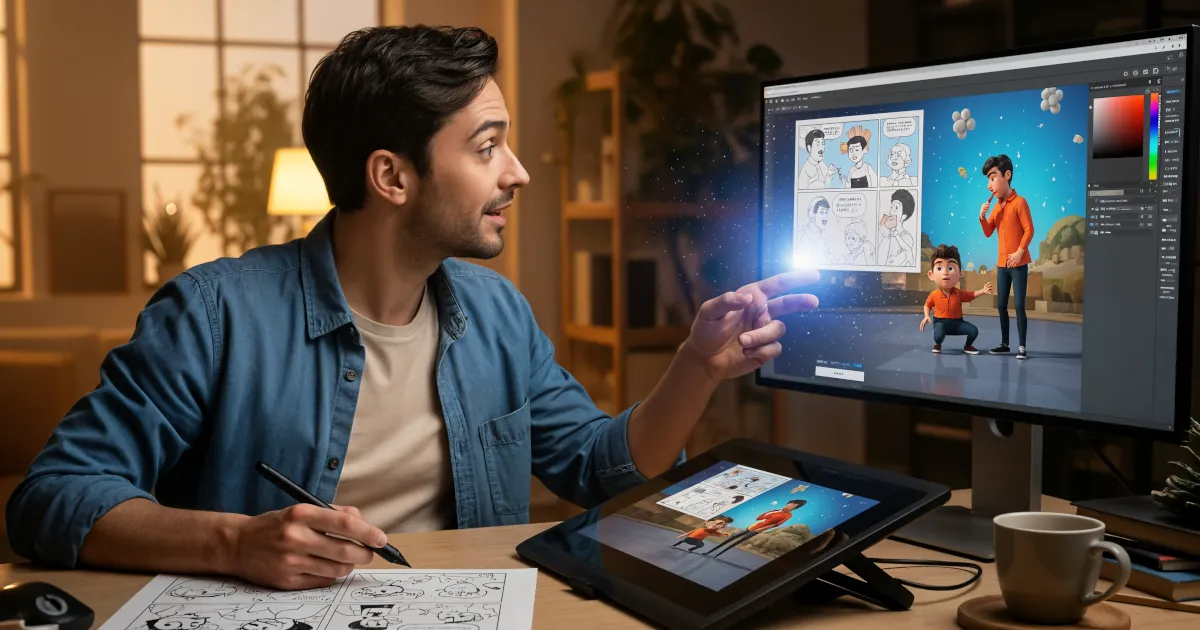
Artists use AI as a creative boost rather than a replacement. It’s a playground of inspiration.
Here are some ways people are using text-to-image AI tools:
- Concept art: Instead of starting from scratch, artists create AI sketches for reference.
- Storytelling: Writers visualize characters, scenes, and settings.
- Marketing & Branding: Businesses create eye-catching visuals quickly.
- Social Media Content: Memes, avatars, inspirational graphics—you name it.
- Game Development: Building worlds through fast concepting.
- Fashion Design: Exploring patterns, colors, and outfits.
What’s powerful is that you don’t need to be an illustrator or a designer. AI gives more people access to visual storytelling.
Can I Try It Now?
YES. Many platforms are ready for you to experiment (some free, some paid), and most are super beginner-friendly.
Here’s a quick list of top AI image generation platforms:
- DALL·E 3 by OpenAI (available in ChatGPT)
- Midjourney (accessed via Discord)
- Stable Diffusion (various platforms use this open-source model)
- Adobe Firefly (great for design-centered prompts)
- Runway ML (especially good for creative professionals)
Each one has slightly different strengths. Some are better at realism, others are more imaginative. Try them, mix your ideas with some quirky prompts, and watch the visual magic unfold.
But Is It "Real" Art?
Now we’re diving into the deep end.
There’s an ongoing debate about whether AI-generated art is “real” art or just algorithmic mimicry. Here’s an easy way to think about it:
Creativity + Tools = Art.
AI is just another tool—like a paintbrush, a camera, or Photoshop. It doesn’t replace creativity; it amplifies it. The spark still comes from your ideas, your words, and the way you experiment with the outputs.
And yes, some people are winning art contests and even selling AI art for serious money. So whether you’re a hobbyist or aspiring creative entrepreneur, the canvas is wide open.
Big Picture: Where Is This Heading?
As AI continues to evolve, here’s what the future could hold:
- 3D model generation from text (not just flat images).
- Fully animated scenes made from simple story prompts.
- Personalized styles—AI learns your unique visual taste.
- Collaborations between AI and traditional artists.
- Accessible art creation for people with disabilities or no access to expensive tools.
The line between code and creativity is blurring fast—and for now—it couldn’t be more exciting.
Final Thoughts: You, the Artist
Your thoughts have power. With AI image generation, your imagination is just a few words away from taking visible form. Whether you’re making memes, movie concepts, or futuristic wallpapers, these tools are giving everyone a shot at being an artist.
So go ahead—type out your wildest idea. A dragon playing chess with a raccoon on top of a Ferris wheel?
Let’s make it happen.
And don’t forget to hit subscribe for more magical explorations into the future of creativity and AI.